Can Any Helmet Stop a Bullet? The Honest Answer
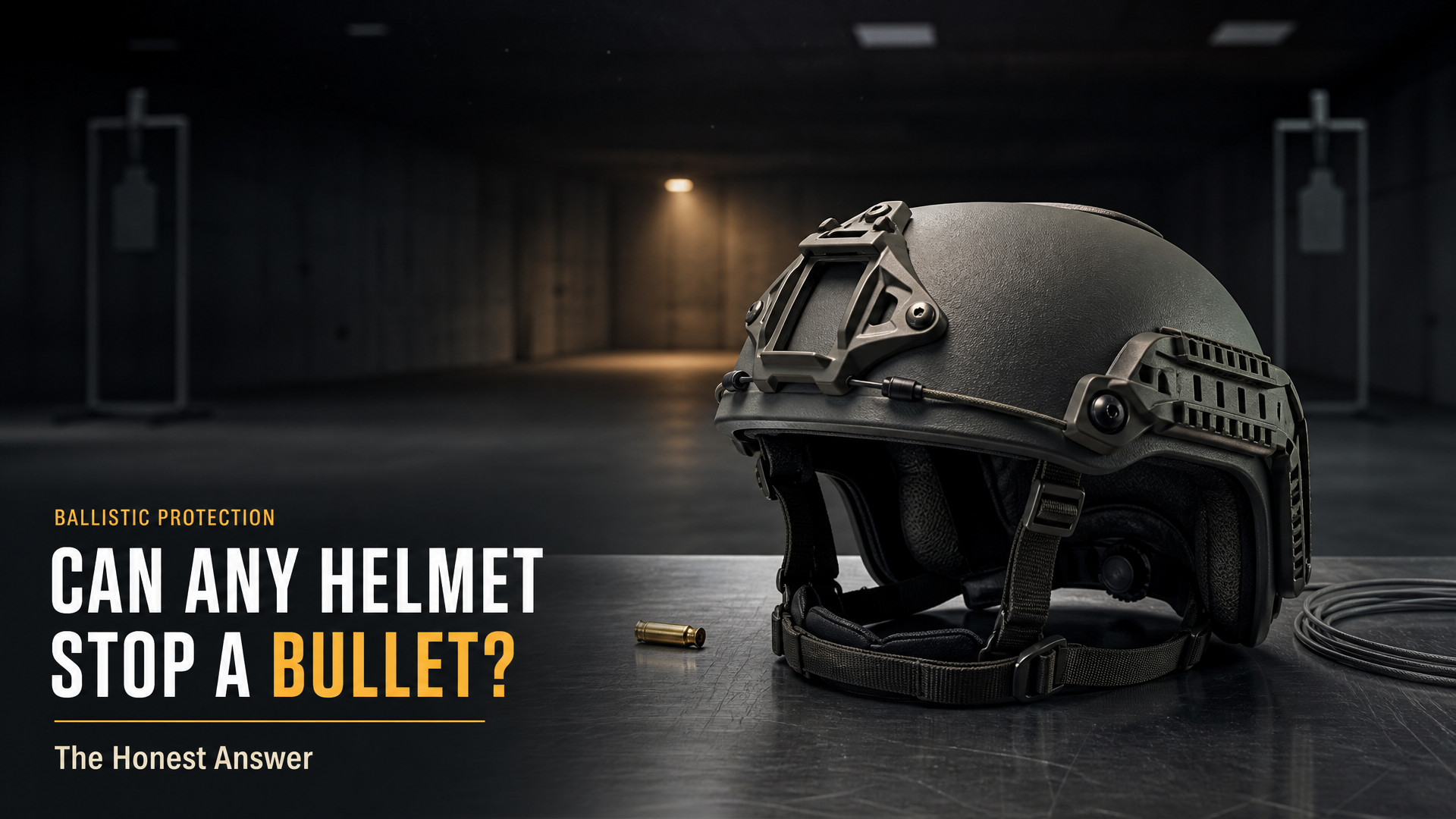
Short Answer: No — and That Is Why the Specs Matter
What Decides the Outcome
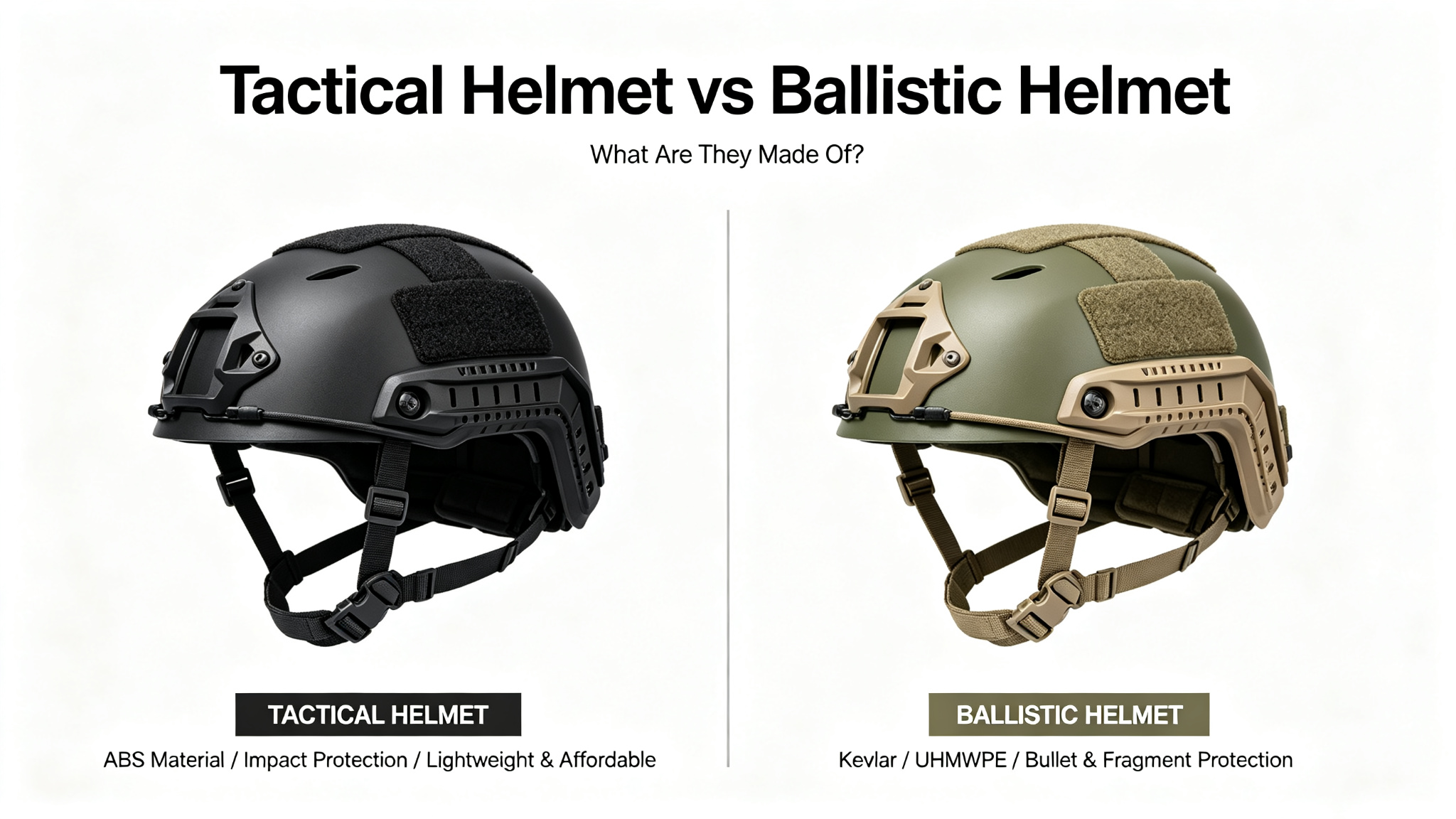
Material. Ultra-high-molecular-weight polyethylene (UHMWPE) offers high strength-to-weight and resists corrosion. Aramid fibers are long-proven for fragmentation. Thermoplastic and EPS shells in bike or industrial helmets carry no ballistic rating at all. A material name, however, is not a protection level; only test data is.
Construction. Ply count and orientation, lamination quality, edge sealing and suspension decide how much energy the shell absorbs before penetration, and how much reaches the head. Non-penetrating hits still deform the shell inward, which is why NIJ Standard 0106.01 covers impact attenuation too.
Ballistic level. NIJ 0106.01 is the standard written for ballistic helmets. Most helmets on the market are Level III-A: handgun rounds (9 mm, .357, .44 Magnum class) plus fragmentation. Rifle-level ratings reference standards such as NIJ Level III (STD 0108.01) and NIJ RF1 (STD 0123.00). A level is a claim under defined test conditions, not a blanket guarantee across a caliber.
The threat. Velocity is decisive. A round at the muzzle carries far more energy than the same round after a few hundred meters. That is why "rifle-rated" needs qualification: if the bullet is slow enough, almost any helmet could be called rifle-rated. FBI LEOKA data shows 62.2% of officers killed by firearms between 2005 and 2014 were shot from 0–10 feet — real encounters happen at muzzle velocity. Projectile type (steel core vs. lead core) and impact angle matter too, and for military users fragments, not bullets, are the dominant threat.
Fragmentation: The Number to Ask For
V50 is the velocity at which a defined fragment has a 50% chance of penetrating the shell. Published figures show how wide the range is: roughly 650 m/s for a typical aramid Level III-A helmet versus roughly 1,350 m/s for a rifle-rated UHMWPE helmet, on the same 17-grain fragment-simulating projectile.
Before You Buy: Four Questions
- Which test standard is named?
- Was it tested at muzzle velocity, or at a reduced velocity?
- Which cartridges, listed specifically?
- Which accredited laboratory, with a report you can request?
If a supplier cannot answer these four questions in writing, treat the claim as marketing rather than protection.
Takeaway
Buy the helmet that matches your threat environment, not the one with the most impressive adjectives. Verify the standard, the level, the tested cartridges and the fragment data — then insist on seeing the lab report.
SHIANDA supplies ballistic helmet solutions for law enforcement, security and professional use. Contact our team for specifications and test documentation.
Educational content only. Verify performance against the current laboratory test report for the exact model. A ballistic helmet reduces risk; it does not eliminate it
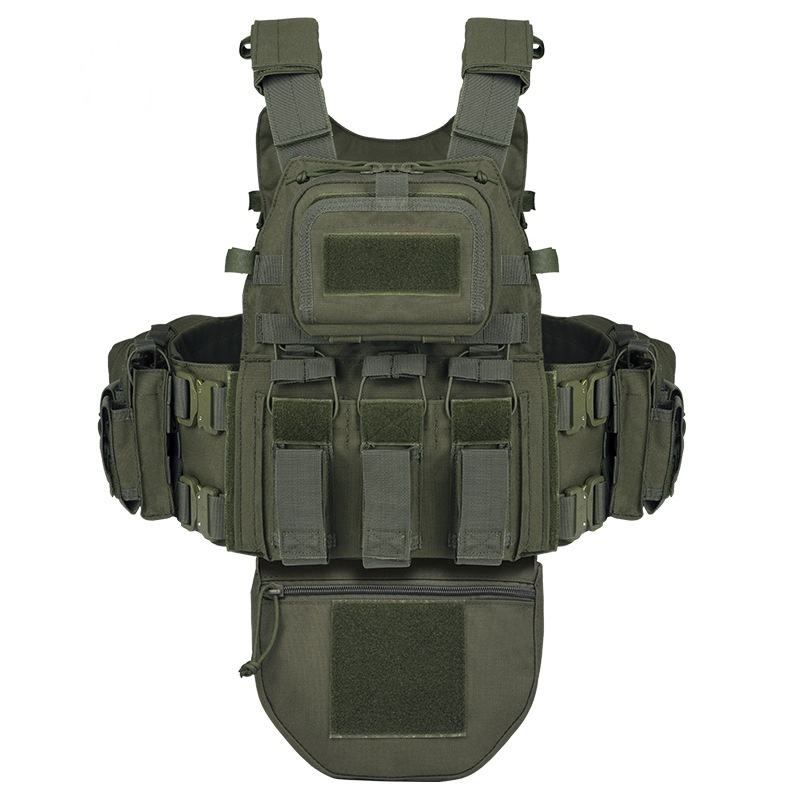
What Is a MOLLE Tactical Vest? A Complete Guide to MOLLE Vest Features and Uses
What are tactical helmets and ballistic helmets made of?
Related Article